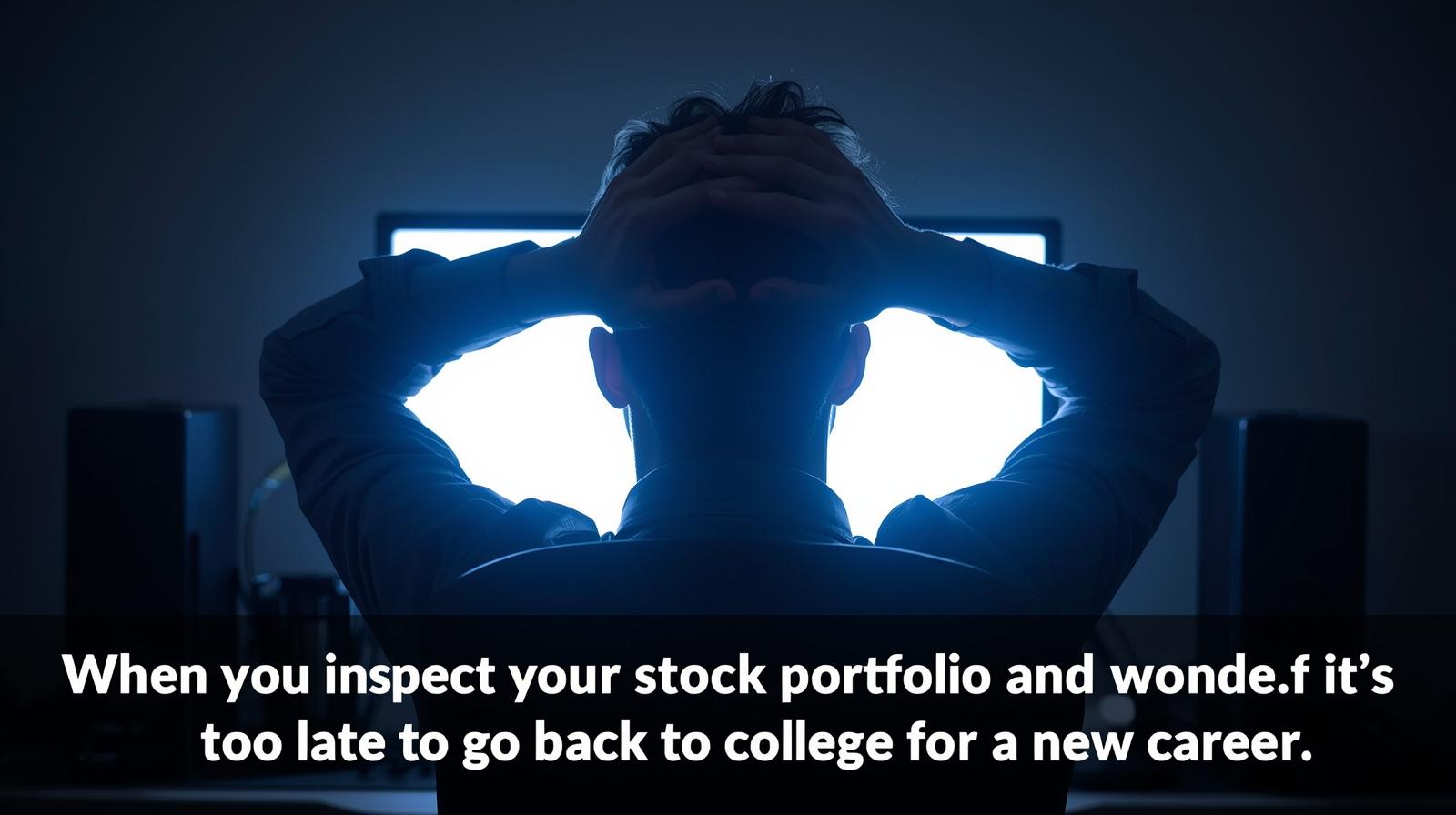
Ah, The Stock Market Crash: Where Your Dreams Go to Die (But Let’s Try to Stay Chill)
Picture this:You’re sipping on your overpriced oat milk latte, scrolling through your phone, and BAM. The stock market crashes. Your portfolio declines just as your self-esteem does after seeing how everyone else appears to be living their best life on TikTok. Suddenly, that beach house you were fantasizing about feels like an even more distant dream than your workout routine. The market’s crashing, your heart’s racing, and everything feels like it’s about to fall apart—just like that one time you realized you’d been eating expired chips for two weeks.
Step 1: Don’t Panic—Seriously, You’re Not Going to Die
Let’s start by taking a deep breath. Breathe. It’s going to be okay. Yes, the market is crashing, but no, you’re not going to lose everything. If you can survive a Zoom call on Monday morning, you can do this. And no, staring at your portfolio every five seconds won’t magically make it go up. If that were the case, the stock market would likely operate in a similar manner, but unfortunately, it doesn’t.
Let’s be honest. The real danger here isn’t the crash itself. The true threat lies within you, particularly when you succumb to panic and act hastily. Remember that time you decided to impulse buy a fitness tracker during a late-night TikTok spiral and then never used it? Yeah, we’re trying to avoid that same energy here.
So, what should you do? Take a moment to pause. Not everyone who survives a crash becomes a millionaire overnight, but they certainly survive if they can keep their cool. This isn’t Survivor: Wall Street Edition. Just remember: you’re not going to lose it all… probably.
Step 2: Stop Listening to Your Uncle Bob’s “Financial Wisdom”
Everyone’s got that one family member who insists they’re an expert on everything—especially the stock market. Enter Uncle Bob. Whenever the market dips, Bob is there saying, “You should have bought X stock, sonny!” In 1999, I made a significant profit. Let’s be real, Bob. You were probably just lucky, and we all know you’re the same guy who thought the 2008 crash was “just a phase.”
Uncle Bob’s advice is about as useful as your mom’s opinion on TikTok trends. If you’re serious about making smart moves when the stock market crashes, stop taking tips from every random person at your Thanksgiving dinner table. The only thing worse than ignoring expert advice is taking advice from the guy who still uses a flip phone and “saves” money by hoarding coupons.
Here’s the rule: If Uncle Bob can’t spell “diversification,” don’t take his advice. Instead, focus on real strategies: long-term investing, not panic selling, and definitely not running to buy into the latest hot stock tip that’s probably already too late.
Step 3: Embrace the Power of “Holding Your Horses” (aka, Don’t Sell Everything)
If you’ve been following the stock market for more than five minutes, you’ve come to the realisation that the market consistently rises and falls. It’s like a catastrophic relationship. One minute it’s all great, the next minute you’re staring at your portfolio like it’s your ex’s new Instagram post. But here’s the key to surviving a crash—be patient.
When circumstances deteriorate, the temptation to quickly press the “sell” button intensifies. But don’t. Panic selling is like trying to run away from your problems instead of dealing with them. Just because the stock market is down doesn’t mean you have to sell everything and take the loss. In fact, selling low is exactly the opposite of what you should be doing.
Instead, take a deep breath, sip your coffee, and remember: markets recover. They always do. Your stocks might be down today, but they could be up tomorrow—or in a year or five. Don’t let one bad day dictate your entire future. Unless you are acquiring an avocado toast company, it might be advisable to proceed with the sale.

Step 4: If you’re going to make a move, make it smart (not a desperate one).
Now, let’s talk about those smart moves you should be making. While the market may be in decline, there’s no reason you can’t take advantage of it if you execute it effectively. Imagine a time when you attended a party, appearing relaxed while secretly believing you were the most impressive person there. This is your moment.
Smart Move 1: Diversify, Don’t Panic-Sell Everything
We understand that when things go wrong, it can be tempting to panic sell your entire portfolio. But that’s literally the opposite of what you should do. Diversification is crucial—avoid concentrating all your investments in a single basket, particularly if it contains risky stocks that are currently experiencing a steep decline. Spread out your investments. Buy bonds, tech stocks, ETFs, or even that weird niche cryptocurrency that might be the next big thing. If your whole portfolio is in one area, you’re asking for trouble.
Smart Move 2: Buy the Dip (But Don’t Overdo It)
Okay, okay. We know you’ve heard it a million times: “Buy the dip!” It’s the financial equivalent of buying a fourth slice of pizza when you’re already full. It feels like a good idea, but you’re just going to regret it later. During a crash, it’s crucial to resist the temptation to invest heavily in a few stocks simply because they’re on sale.
Instead, consider doing some research (yes, actually read some articles, not just the “top 5 stocks to buy now” list from some random YouTube influencer). If the company has strong fundamentals, now might be a good time to buy—just don’t blow your entire savings account on it.
Conclusion: Congratulations, You Didn’t Completely Freak Out
If you’ve made it to the end of this post, congratulations. You’ve survived the stock market crash (at least emotionally). Hopefully, you’ve learned how to stay calm, how to resist Uncle Bob’s advice, and how to make smart moves—because we all know the crash isn’t going to last forever, and neither will your panic.
At the end of the day, the best way to survive a stock market crash is to act like you’re way cooler than you actually feel. Stay chill, keep your head in the game, and for the love of caffeine, don’t make any rash decisions based on pure panic. Your future self will thank you—or at least not curse you out when you look at your bank account.
Note: You might even end up better off than you were before—if you can survive the emotional rollercoaster. But hey, that’s life, right?